We make February the month of technology with our support tariff for professionals.
Valid in the Peninsula and Balearic Islands from February 1 to 28, 2022.
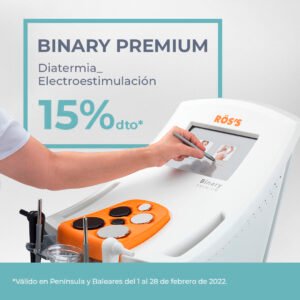
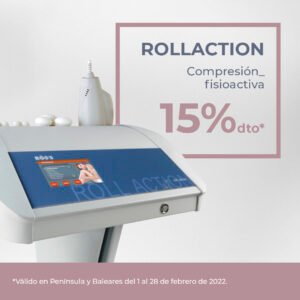
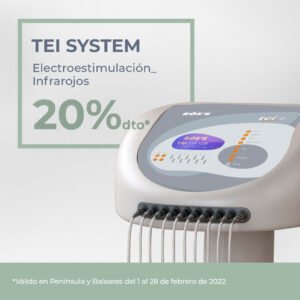
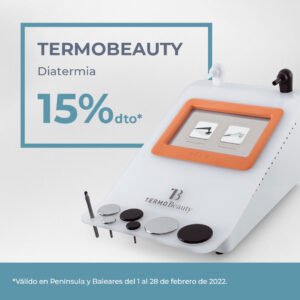

We make February the month of technology with our support tariff for professionals.
Valid in the Peninsula and Balearic Islands from February 1 to 28, 2022.
Innova Experts Group awards RÖS'S as an innovative company. This Certificate of Innovative SME awarded by the Ministry of Industry recognizes RÖS'S as a company committed to innovation and technological development.
Carlos Moliner was a pioneer in the manufacture of technology for professional use in Spain. After 43 years at the helm of the company, he is one of the veterans in the world of professional aesthetics and one of those who has accumulated the most achievements and awards in the sector: outstanding career award, leading company in OEM manufacturing or innovation awards for the creation of technologies such as roll-active massage, thermo-stimulation or blend hair removal.
The company receives recognition from the Spanish Ministry of Economy and Competitiveness (MINECO) for its innovative character, thus supporting its growth and sustainability.
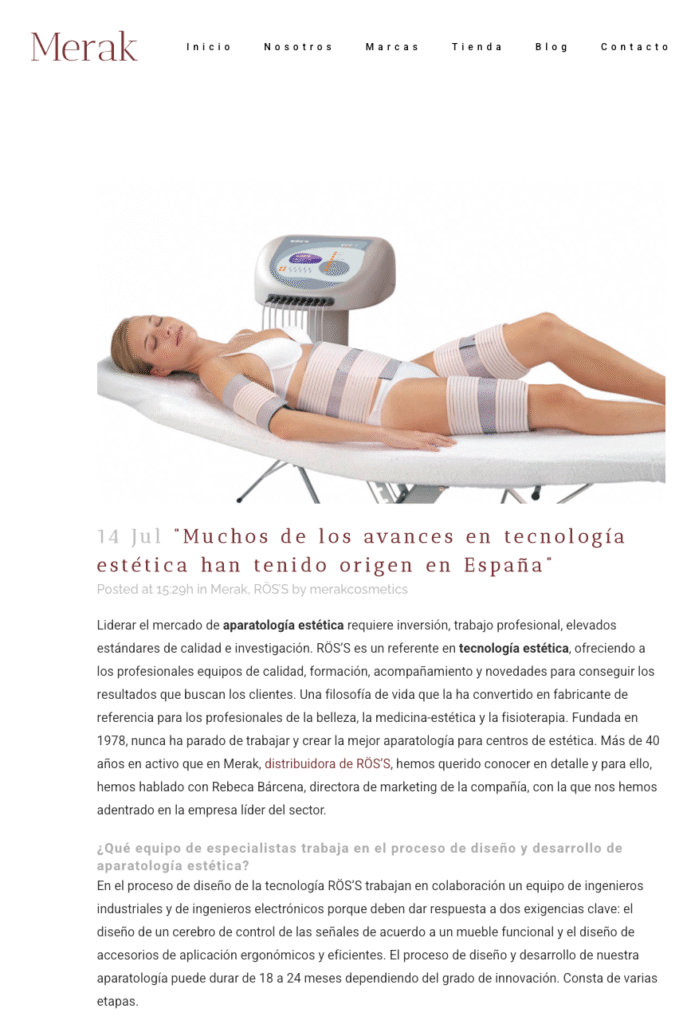
The interview with our Marketing Director, Rebeca Bárcena, on the blog of Merak CosmeticsIt highlights that many of the advances in aesthetic technology have originated in Spain.
Despite the incursion of Asian manufacturers into the sector, the prestige of Spanish technology and cosmetics internationally is very high due to its tradition and its capacity to innovate, not only in energy, but also in applications.
After last year's confinement, the following activities were carried out various studies which found that the use of digital devices increased significantly to over nine hours of daily use. Adapting to the "new normal" has required the adoption of telework and online education in the daily lives of millions of workers and students so that they can continue with their activity.
This high exposure to screens not only influences personal well-being (excessive use of technology is associated with lower well-being), but also the blue light emitted by electronic devices has a very negative effect on the skin..
The Spanish Academy of Dermatology and Venerealogy (AEDV) already presented at its 47th National Congress scientific evidence on the radiation produced by different blue light emitting sources, such as the sun and screens, and how this can produce a deterioration in the "barrier effect" of the skin.
Exposure to blue light from laptops, cell phones, screens and white LEDs can cause skin damage due to oxidative stress, while causing increased skin dehydration and accelerating the destruction of collagen in the dermis. All this translates into a "skin photoaging"accelerated or premature skin agingThe consequences and signs of a lack of skin tone: flaccidity, wrinkles, lack of luminosity or increased pigmentation are some of its consequences. devitalized skin.

In the skin devitalization the sweat glands secrete less oil and sweat, the skin becomes drier and dehydrated. A devitalized skin usually shows a lack of luminosity, looks dull and with little elasticity, which makes the signs of flaccidity, spots and wrinkles more pronounced.
It can appear in any type of skin (although contrary to what happens with solar radiation that harms lighter skins more, darker skins and higher phototypes are more sensitive to blue light) and usually occurs after 35 years of age, although it is possible to find it in younger people as a malnourished skin.
With the BInary Revitalizing Program we achieve an activation of microcirculation, with the consequent improvement of oxygenation and nutrition. The luminosity is immediate on the face and, session after session, a redensification and remodeling of the facial contour is achieved. Depending on the needs of the skin, it is recommended to accompany the treatment with a specific cosmetic protocol.
The treatment will always start with a capacitive biostimulation in thermal/hyperthermic mode (depending on the skin condition and sensitivity of the client) for 30 minutes and then move on to a resistive biostimulation in thermal/hyperthermic mode for 10 minutes.
Although the current situation promotes teleworking and distance learning, dermatologists also recommend, as far as possible:
El ensayo pone de manifiesto el aumento de satisfacción y mejora física entre el tratamiento manual, el tratamiento solo con diatermia y el tratamiento que combina electroestimulación y diatermia.
Ana Abelló, fisioterapeuta especializada en tratamiento de suelo pélvico, en colaboración con el Servei de Recerca en Fisioteràpia. Escoles Universitàries Gimbernat (UAB) está trabajando en la última fase de su estudio de aplicación del sistema BInary para tratar la dispareunia en pacientes con cáncer de mama, con resultados muy positivos.
Tras una larga trayectoria trabajando con patologías musculares de suelo pélvico, Ana Abelló observó que los tratamientos con fisioterapia manual en dispareunia eran dolorosos, lentos e incómodos. Esta patología es especialmente común en pacientes de cáncer de mama y se convierte en una de las preocupaciones físicas más importantes después de los tratamientos oncológicos. La aparición o desarrollo de disfunciones sexuales como consecuencia del tratamiento del cáncer es multifactorial y todas las modalidades pueden aumentar la morbilidad. La dispareunia (dolor o molestia antes, después o durante la unión sexual) es uno de los más frecuentes y se estima que su prevalencia ronda el 30-60%.
La encuesta preliminar llevada a cabo con 116 mujeres desprende unos datos sorprendentes que han sido recogidos en el Poster de presentación del estudio. Un 70% de las encuestadas admiten sufrir dispareunia tras el diagnóstico y un 96% de las encuestadas afirma que está afectando seriamente a sus relaciones sexuales. Estos datos desprenden una realidad que todavía es tabú, y que agravan el complicado momento de vida de las pacientes.
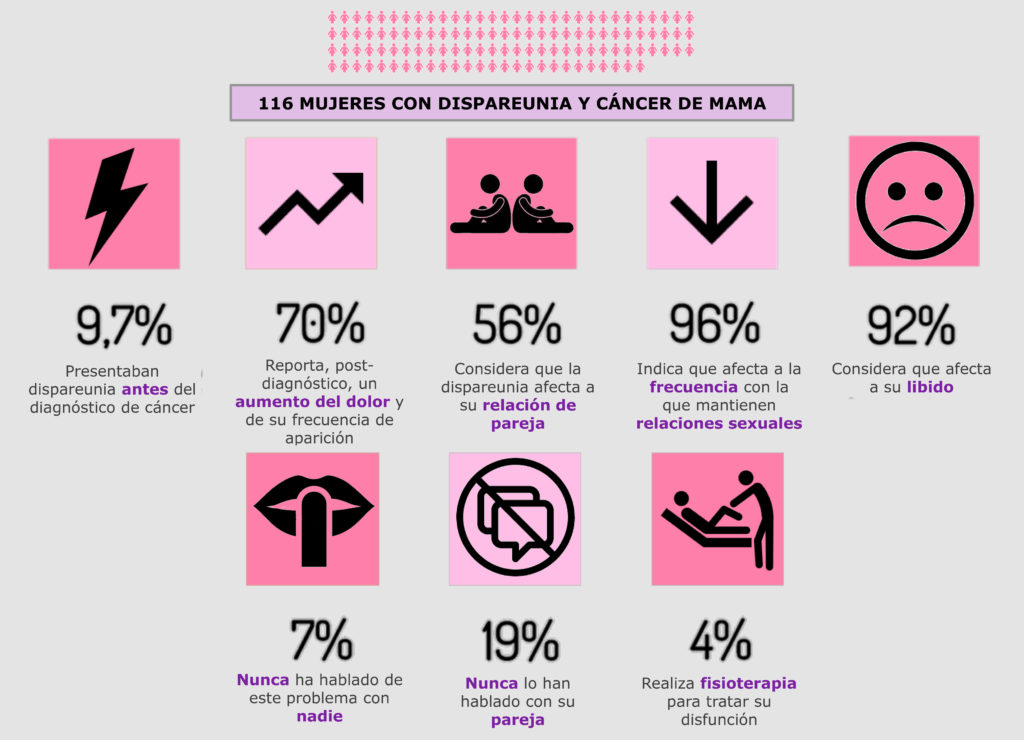
El ensayo piloto llevado a cabo con un grupo experimental de mujeres entre 25 y 75 años desprende resultados muy buenos a las 8 sesiones. La mejora real y percepción de mejora (medidas por escalas objetivas profesionales) es superior en el grupo de pacientes tratados con la combinación de diatermia + electroestimulación, respecto al grupo tratado únicamente con terapia manual. Las principales variables evaluadas han sido la función sexual, la calidad de las relaciones sexuales, el dolor y la calidad de vida relacionada con la salud.
Tras estos resultados tan favorables, no se descarta continuar con el ensayo clínico. Continuará.