The trial highlights the increased satisfaction and physical improvement between manual therapy, diathermy-only therapy, and the therapy that combines electrostimulation and diathermy.
Ana Abelló, a physiotherapist specializing in pelvic floor treatment, in collaboration with Physiotherapy Research Service. Gimbernat University Schools (UAB) is working on the final phase of its application study of the Binary system to treat dyspareunia in breast cancer patients, with very positive results.
What is dyspareunia?
After a long career working with pelvic floor muscle pathologies, Ana Abelló observed that treatments with manual physiotherapy in dyspareunia They were painful, slow, and uncomfortable. This condition is especially common in breast cancer patients and becomes one of the most significant physical concerns after cancer treatments. The onset or development of sexual dysfunctions as a consequence of cancer treatment is multifactorial, and all modalities can increase morbidity. Dyspareunia (pain or discomfort before, during, or after sexual intercourse) is one of the most frequent, and its prevalence is estimated to be around 30-60%.
Data about the study
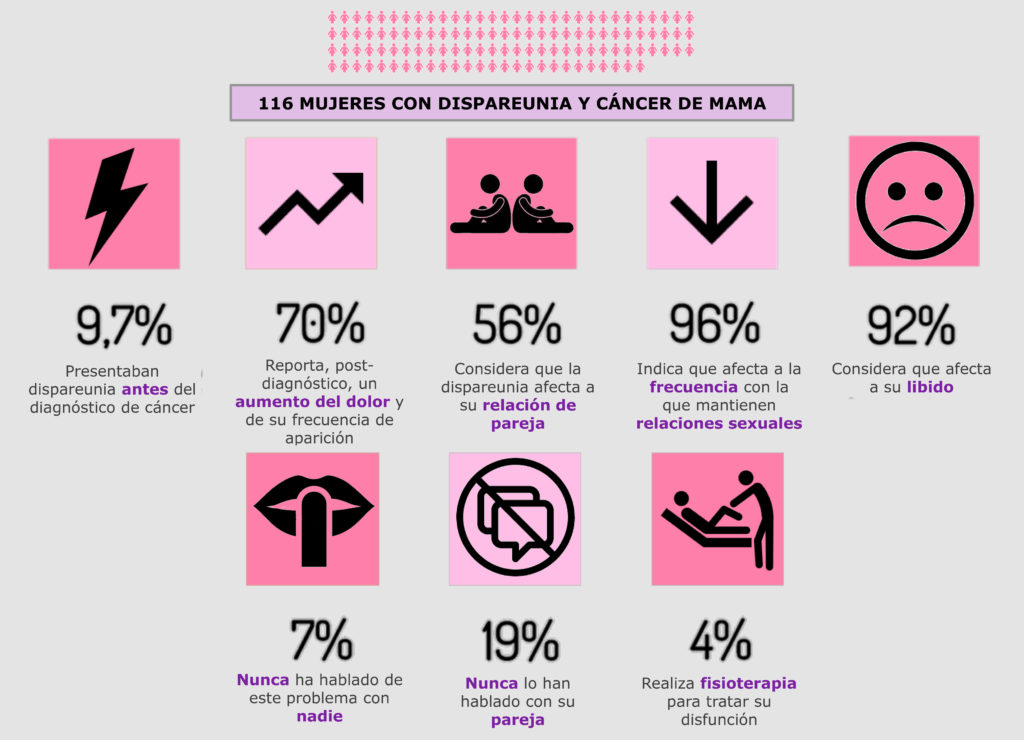
The preliminary survey conducted with 116 women It reveals some surprising data that has been compiled in the study's presentation poster. 70% of the respondents They admit to suffering from dyspareunia after diagnosis and a 96% of the respondents She says it's seriously affecting her sex life. This data reveals a reality that is still taboo, and it exacerbates the already difficult time in the lives of these patients.
Surprising results
The pilot trial conducted with an experimental group of women between 25 and 75 years old gives off Very good results after 8 sessionsThe actual improvement and perceived improvement (measured by objective professional scales) is greater in the group of patients treated with the combination of diathermy + electrostimulationcompared to the group treated only with manual therapy. The main variables evaluated were sexual function, quality of sexual relations, pain, and health-related quality of life.
Following these very favorable results, continuing the clinical trial is not ruled out. To be continued.